

Kazakhstan Signals Willingness but Awaits Formal Request from Wildberries
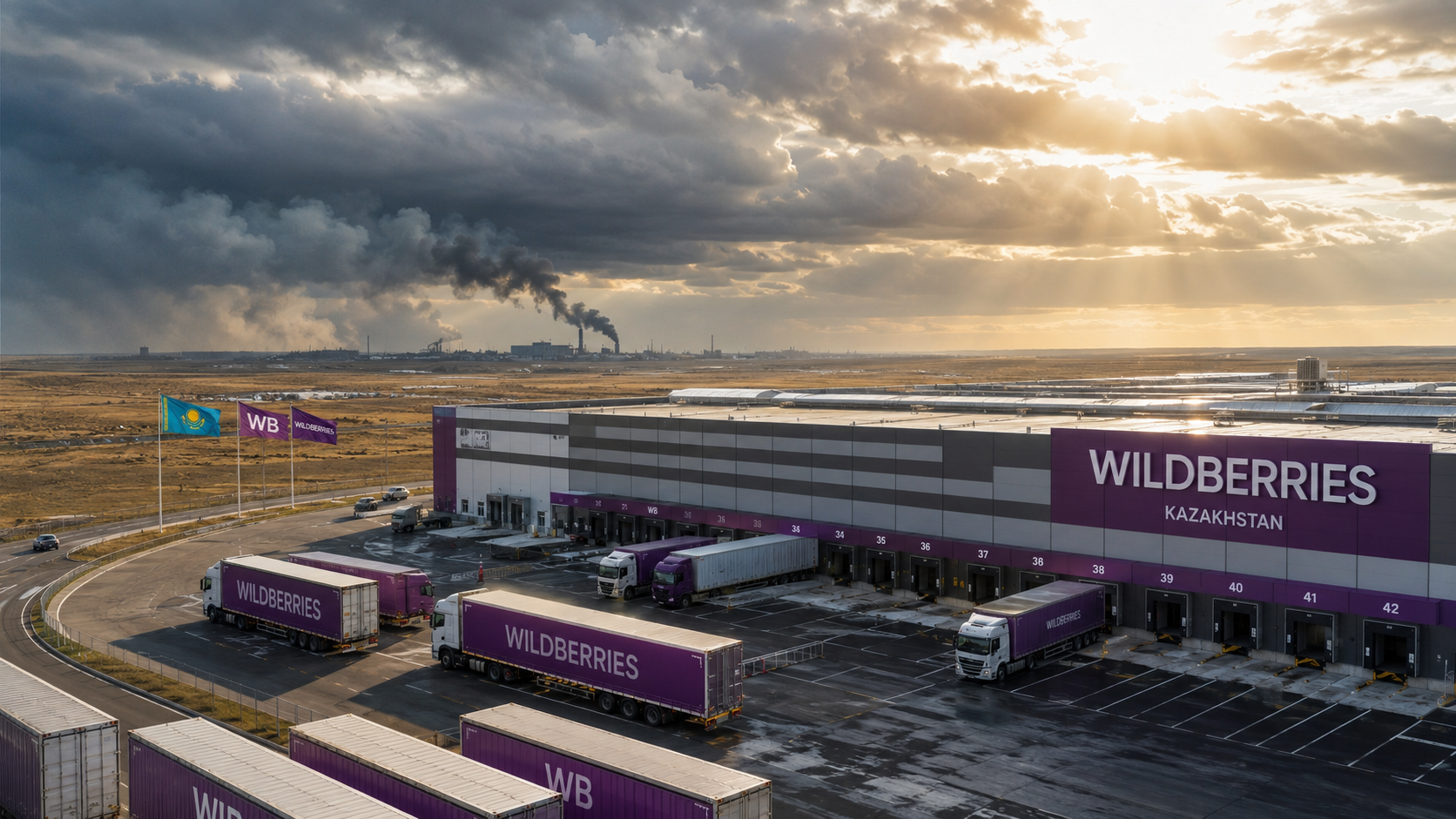
Kazakhstan has not yet received an official application from Russian e-commerce giant Wildberries to set up additional warehouse capacity on its territory, the country’s Ministry of Trade and Integration said on 29 July. The statement followed reports that the merged Wildberries-Russ (RWB) entity is scouting for up to 100,000 square metres of vacant storage space in Kazakhstan after a string of drone strikes damaged several of its logistics hubs inside Russia.
The ministry stressed that any proposal from the company would be examined “taking into account national interests” and in line with Kazakh law. It underlined that any project must be mutually beneficial, create opportunities for local entrepreneurs and be accompanied by investment into Kazakhstan’s economy, noting the country’s substantial transit and logistics potential.
Since mid-July, drone attacks have hit RWB logistics facilities in the Moscow, Tambov, Krasnodar and Stavropol regions, as well as in St Petersburg, the Leningrad region and Simferopol. Founder Tatyana Kim acknowledged that although the company’s assets are insured, current insurance products for large industrial sites do not cover terrorism or drone-attack risks, leaving RWB exposed to heavy physical and financial damage.
The reports of Wildberries’ search for space in Kazakhstan, first carried by the Kommersant daily citing sources, highlight how the security situation is reshaping the logistics map of one of Russia’s largest online marketplaces, with potential knock-on effects for thousands of Kazakhstani sellers who depend on RWB’s fulfilment network.
Where the Search for Kazakh Warehouses Leaves Wildberries, Sellers and Insurers
Wildberries’ logistics crisis deepens
The successive drone attacks have turned RWB’s domestic warehousing network into a liability. Even temporary closures and evacuations disrupt deliveries and inventory management, while physical destruction at multiple sites forces the company to find replacement capacity quickly. The reported search in Kazakhstan suggests that RWB sees cross-border warehousing as a more resilient alternative, at least for some product lines, but it also signals a lack of sufficient safe and available space inside Russia.
Kazakhstan’s strategic gambit
By publicly stating that no formal request has arrived, Astana keeps the door open while preserving negotiating leverage. The ministry’s insistence on “mutual benefit” and alignment with national interests indicates it may seek guarantees on local employment, infrastructure investment and support for Kazakh sellers in any deal. For Kazakhstan, which already brands itself as a Eurasian logistics hub, hosting a major Russian marketplace’s warehouse could boost real estate demand and cross-border e-commerce—but only if terms are attractive enough.
The insurance gap and uninsurable risks
Tatyana Kim’s disclosure that current policies exclude terrorism and drone risks is a red flag far beyond Wildberries. Large warehouse operators across the region may now struggle to obtain full coverage, raising the cost of capital or forcing self-insurance. This gap could widen if insurers retreat from covering any industrial assets near conflict zones, directly affecting how and where logistics companies choose to site new facilities.
Implications for Kazakh sellers
Over 1 billion tenge of losses were reported by Kazakhstani sellers on Wildberries due to the drone attacks, according to earlier estimates. A physical warehouse in Kazakhstan could speed up delivery times and reduce dependency on vulnerable Russian hubs, but it would also raise questions about whether RWB will offer the same fulfilment and return terms to sellers operating from a new country node.
What Business Leaders and Investors Should Watch Next
- For Wildberries/RWB management: Any deployment to Kazakhstan will need a formal submission that demonstrates local job creation and investment in line with Astana’s stated priorities; the company should prepare a proposal quantifying these commitments before approaching the ministry.
- For insurers and risk managers: The admission that standard policies exclude drone-related damage should trigger a review of coverage for logistics assets in conflict-exposed regions; alternative risk-transfer mechanisms—such as parametric insurance or government-backed schemes—merit exploration.
- For Kazakh sellers on Wildberries: A Kazakh warehouse could shorten delivery times and reduce exposure to disruptions in Russia, but until a deal is signed, sellers should map alternative fulfilment channels and monitor damage compensation processes for the July attacks.
- For investors in Russian e-commerce: RWB’s operational resilience is being tested; the speed and cost of securing and equipping warehouse space abroad will be a key metric to watch in coming months, alongside any impact on gross merchandise volume from seller defections.
Risk & Opportunity Assessment
| Commercial Risk | Medium | Repeated drone attacks on Russian logistics hubs can disrupt order fulfilment, increase costs and delay revenue; reconstruction or relocation to Kazakhstan requires capital that may strain RWB’s balance sheet. |
| Competitive Risk | Medium | Rival marketplaces such as Ozon or Yandex Market could capture market share if Wildberries suffers prolonged service disruptions or if sellers migrate to platforms with more stable fulfilment networks. |
| Regulatory Risk | Low | Kazakhstan has signalled openness to the project, but any deal will be subject to local laws and national interest conditions; the risk of a prolonged negotiation or unfavourable terms is moderate. |
| Reputation Risk | Medium | Kazakhstani sellers already suffered more than 1 billion tenge in losses from drone-induced disruptions; failure to compensate them or to quickly restore reliable operations could erode trust in the platform across Central Asia. |
| Technology Disruption | Low | No specific technology shift is driving the warehouse search; the situation stems from physical security failures rather than a disruptive competing business model. |
| Commercial Opportunity | High | Establishing a warehouse in Kazakhstan could open a new cross-border e-commerce corridor, reduce exposure to Russia-side risks and strengthen Wildberries’ position in Central Asian markets if executed fast and with local partnership. |
Comments 0