

Pouyanné’s Appeal for a Greek Tanker Exemption
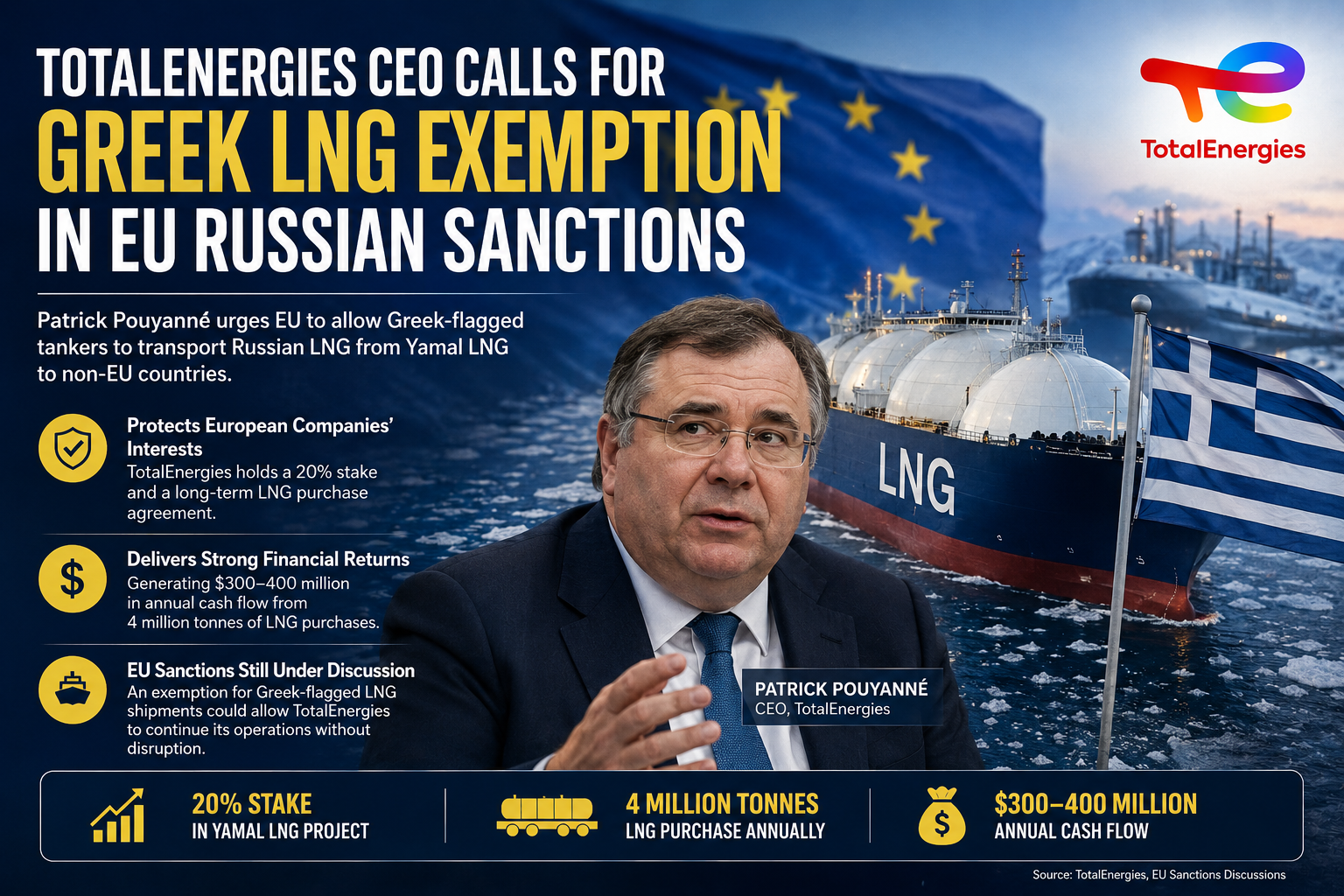
TotalEnergies CEO Patrick Pouyanné has publicly urged the European Commission to take account of European companies' interests when finalising the next round of sanctions on Russian LNG. Speaking to analysts, he revealed that EU member states are still debating the “legal wording” of the package, with Greece pushing for a specific exemption that would allow Greek-flagged LNG tankers to transport Russian LNG provided it is discharged outside EU territory.
Pouyanné argued that such a clause would effectively permit European vessels to carry and sell gas from the Yamal LNG project to non‑EU buyers. “It would allow the transportation and purchase of Yamal LNG if we used European LNG tankers outside the EU,” he said, adding that European firms’ interests “must be protected beyond the EU.”
TotalEnergies holds a 20% stake in Yamal LNG and has two distinct links to the project. The first is its equity holding, which is already constrained by sanctions — the company flagged difficulties in repatriating dividends. The second is a long‑term contract to buy 4 million tonnes of LNG annually from the plant, a business that is executed entirely outside Russia via legal entities in the UK and Switzerland. Pouyanné said this trading stream generates average annual cash flows of $300–400 million, though the amount fluctuates because the contracts are linked to Brent crude prices.
Two Revenue Streams, One Sanctions Puzzle
The Greek Tanker Gambit and Yamal LNG
The Greek proposal is more than a shipping technicality. Because European sanctions make it illegal for EU‑registered vessels to carry Russian LNG within EU waters, the exemption would open a legal pathway for Greek tankers to load at Yamal LNG and deliver the cargo to Asian or other non‑EU terminals. That is crucial because Yamal LNG has historically relied on a fleet of specialised ice‑class tankers — many of them managed from Cyprus and Greece — to ship its product year‑round from the Arctic port of Sabetta. Without a carrier exemption, those flows could be severely disrupted, forcing the project to find non‑EU tonnage at higher cost and reducing the competitiveness of its LNG.
TotalEnergies’ Dual Exposure: Dividends vs. Trading
The French major’s exposure to Yamal LNG is now split in two. The equity stake is effectively frozen: sanctions block the distribution of dividends from Russia to European shareholders, making it “difficult to generate cash flow from the project” in Pouyanné’s words. By contrast, the offtake contract is a separate, fully operational business that has continued to function through non‑Russian entities. The London and Geneva subsidiaries interact with Russian counterparties but under contractual terms signed before the war, and they bank the resulting proceeds in hard currency. That trading arm is therefore the only part of the Yamal LNG relationship that still delivers material, recurring cash to TotalEnergies.
Pouyanné’s lobbying is aimed squarely at protecting this revenue pillar. If the EU adopts the Greek‑style exemption, TotalEnergies can continue selling the 4 million tonnes through its UK and Swiss desks without reputational or legal jeopardy. If the exemption is rejected, the company could face pressure to unwind the offtake or redirect it through more complex, non‑European structures — raising costs and inviting greater compliance risk. The $300–400 million figure also underscores the materiality of the cash stream, equivalent to roughly 3–4% of the group’s quarterly operating cash flow, and highly sensitive to oil prices because of the Brent‑linked pricing formula.
What the Carve-Out Means for TotalEnergies Investors
- If the Greek exemption is adopted, TotalEnergies can continue to ship and sell its 4 Mtpa of Yamal LNG virtually uninterrupted, securing the annual $300–400 million cash stream. However, dividend repatriation from the equity stake will remain blocked under existing sanctions.
- Watch the EU legislative text — expected in the coming weeks. A rejection of the tanker exemption could force the company to re‑route shipments via non‑EU vessels or alter its offtake structure, potentially reducing margins and attracting additional compliance costs.
- Brent crude price fluctuations will materially swing the value of the LNG sales contract, as it is priced against oil benchmarks. Investors should monitor crude markets as a direct driver of this revenue line.
- US secondary sanctions risk is not addressed in the EU debate. The UK and Swiss entities that execute the trades may face future pressure from Washington, which could override any European accommodation.
Risk & Opportunity Assessment
| Commercial Risk | Medium | Without the tanker exemption, the offtake business may become unworkable under EU sanctions, putting the $300–400m annual cash flow at risk. Even with the exemption, the shareholder dividend blockage continues, limiting total return from the Yamal stake. |
| Competitive Risk | Low | The exemption would largely level the playing field among European LNG traders. No single competitor appears poised to gain a decisive advantage, though Greek shipping interests stand to benefit disproportionately if the clause is approved. |
| Regulatory Risk | High | The EU sanctions package is still being negotiated, and the Greek tanker proposal is not yet secure. Any final text that prohibits EU‑linked transport of Russian LNG — even outside the bloc — would immediately jeopardise TotalEnergies’ offtake arrangement. |
| Reputation Risk | Medium | Continuing to trade Russian LNG, even through non‑EU entities, attracts scrutiny from Western governments, NGOs and some investors. The public narrative around European companies’ role in facilitating Russian energy exports remains sensitive. |
| Technology Disruption | Low | No technology shift is altering the fundamentals of this business. The core issue is legal and political, not technological. |
| Commercial Opportunity | High | If the exemption passes, TotalEnergies can lock in the full cash flow from its 4 Mtpa offtake while competitors without a similar contractual position may struggle to access Russian LNG. This could strengthen its trading role in non‑EU markets, especially Asia. |
Comments 0