

What Happened in Kumamoto on July 28
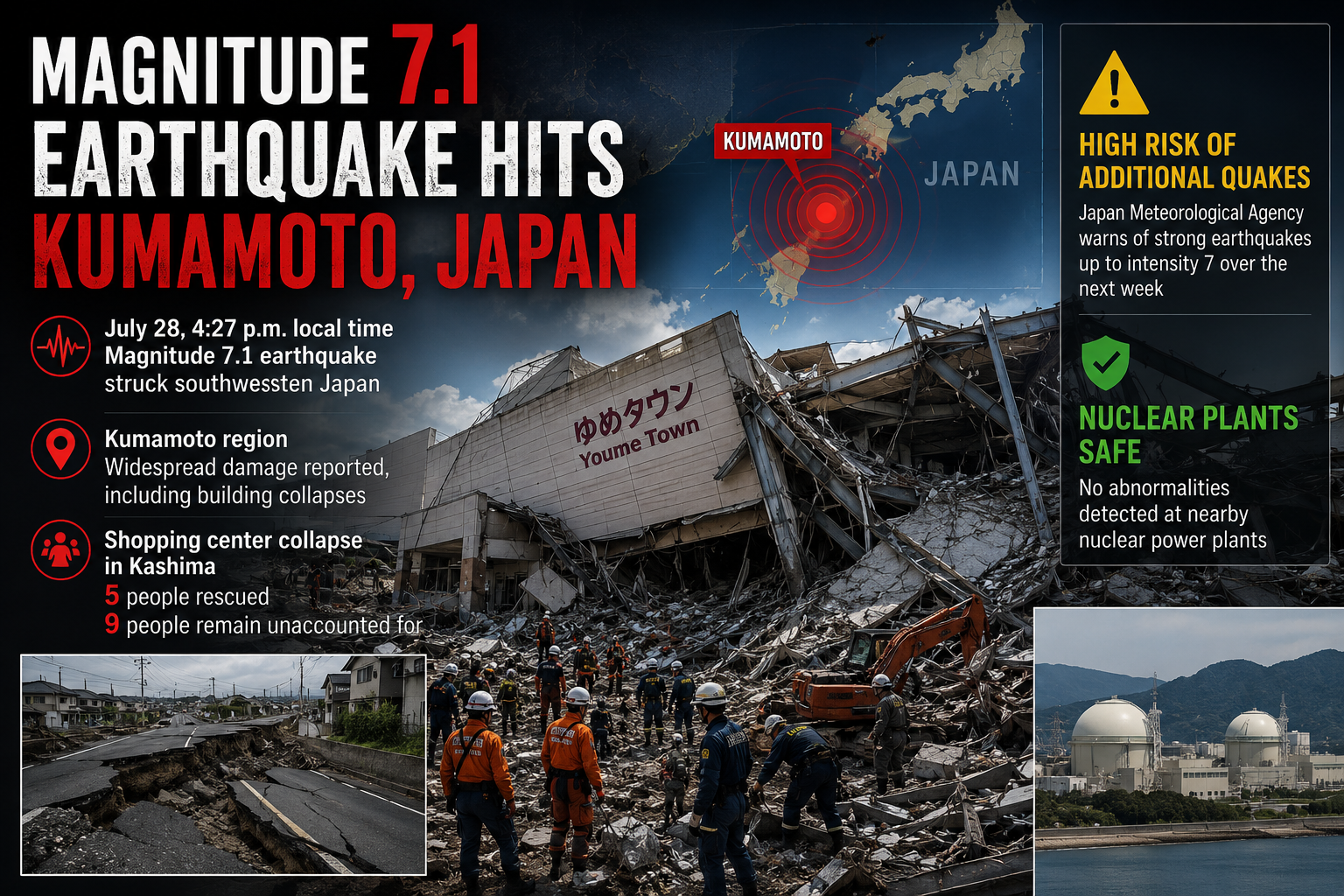
A severe earthquake struck the Kumamoto region of southwestern Japan at 4:27 p.m. local time on July 28, with the Japan Meteorological Agency estimating a magnitude of 7.1. The quake's shallow depth of 16 kilometers amplified ground shaking, producing an intensity of 7 — the highest level on Japan's seismic scale — in the cities of Uki and the town of Hikawa.
The tremors caused widespread damage. In the town of Kashima, the second floor of the Aeon Mall Kumamoto shopping center collapsed; five people were rescued from the rubble, but nine others remain unaccounted for. Local authorities reported a surge of rescue calls from Uki, Yatsushiro, and surrounding areas, with numerous building collapses and fires adding to the emergency. The prefectural government quickly requested the dispatch of Self-Defense Forces to assist firefighters and police.
A temporary tsunami advisory was issued for the Ariake Sea and Yatsushiro Sea coasts across four prefectures but was later lifted. According to the Nuclear Regulation Authority, no abnormalities were detected at the Genkai, Sendai, or Ikata nuclear power plants. Police are investigating reports of explosions possibly linked to gas leaks, though the cause remains unconfirmed.
Seismic Context and Immediate Impact of the 2026 Kumamoto Earthquake
A Region Scarred by Seismic Activity
This earthquake struck near the Hinagu Fault Zone, a known source of large tremors in the area. In April 2016, two devastating earthquakes — a magnitude 6.5 foreshock and a magnitude 7.3 mainshock — caused extensive destruction in Kumamoto, killing over 200 people and damaging thousands of buildings. Those events were traced to movements on segments of the Hinagu and Futagawa fault zones. While officials have not yet confirmed whether the latest quake resulted from a slip on the Hinagu Fault, the proximity and similar focal mechanism raise immediate comparisons and concern among seismologists.
The Current Threat Level
At a press conference, a senior JMA official warned that the risk of another large earthquake remains high. The agency advised that tremors of up to intensity 7 could occur over the following week, a standard but urgent caution following a major seismic event. This means that even if the initial shock did not cause a building to collapse, subsequent aftershocks could bring down already weakened structures, posing a continuous danger to both residents and rescue teams.
Infrastructure and Nuclear Safety
Japan's strict post-Fukushima nuclear safety protocols appear to have held. The quick confirmation of normal operations at the Genkai, Sendai, and Ikata plants provides some reassurance against a compound disaster. Meanwhile, the collapse of a large commercial facility like Aeon Mall Kumamoto underscores the vulnerability of modern retail infrastructure to severe shaking, particularly in areas not retrofitted to the highest standards. The building collapse is likely to trigger an investigation into structural safety compliance in the region.
What Residents and Responders Need to Know Right Now
For residents in the affected areas: Follow all instructions from local authorities, particularly evacuation orders to avoid damaged buildings and areas at risk of further collapse. The JMA has explicitly warned of additional earthquakes of up to maximum intensity 7 over the next week; treat every significant aftershock as a potential new threat and stay away from compromised structures.
For those awaiting news of loved ones: Communication networks may be disrupted. Use designated emergency messaging systems and gather at official information points if safe to do so. Rescue operations are ongoing, with Self-Defense Forces, police, and fire departments prioritizing collapsed buildings where people are still trapped.
For travelers and businesses: Expect disruptions to transportation, electricity, and supply chains in the region. The Aeon Mall collapse, while a human tragedy, will also affect local commerce — businesses should review emergency continuity plans and monitor official updates on infrastructure restoration timelines.
Comments 0